
Six Minutes vs. Ninety: How a Cuda 2530 Transformed Duplex Pump Strainer Cleaning
When one of our industrial customers asked if a Cuda aqueous
parts washer could really make a difference on their dirty duplex pump
strainers, we suggested a simple test: bring us the worst one they had. This
facility pulls and cleans six duplex pump strainer baskets every two to three
days as part of their normal maintenance rotation, so anything that shortens
that job has a real, recurring payoff.
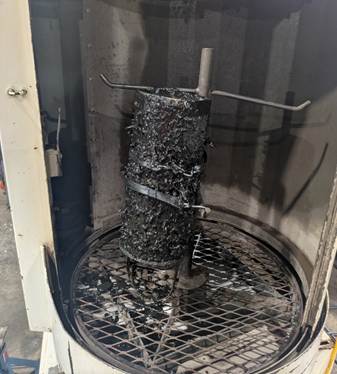
They delivered a carbon‑loaded, fully plugged metal strainer
basket coated in thick sludge and baked‑on contaminants. It was exactly the
kind of part that normally eats up time, solvent, and patience on the shop
floor.
The Customer’s Existing Process
Before the test, we documented how they currently clean
these strainers:
- Soak the strainer in a steam box
- Move
the part into a separate solvent tank - Manually
brush and scrape remaining buildup off the perforated metal by hand
In practice, the customer told us it takes roughly three
hours from start to finish to clean two duplex strainers using this process —
about 90 minutes per basket once you factor in handling, brushing every
perforation, and dealing with solvent mess and PPE. Across the six strainers
they clean every two to three days, that adds up to about nine hours of skilled
technician time tied up in manual scrubbing on every rotation.
That time adds up quickly when you are running six strainers
every two to three days, week after week.
The Cuda 2530 Test
For the demo, we used our in-house Cuda 2530 front-load
aqueous parts washer. The 2530 is an enclosed, automatic cabinet washer with a
25″ rotating turntable and a 3 HP vertical seal-less pump that delivers
about 50 GPM at 45 PSI through multiple spray nozzles.
Process:
- Loaded
the contaminated strainer into the Cuda 2530. - Closed
the door, selected a 6‑minute wash cycle, and hit start. - Walked
away – no manual scrubbing, no solvent tank, no brush work.
The washer’s combination of hot water, specialized
detergent, and high-pressure spray did the rest inside the cabinet, similar to
how an industrial dishwasher operates.
The Results: From Plugged to Clean in One Short Cycle
After six minutes, we opened the cabinet and pulled the
basket out. The difference was dramatic.
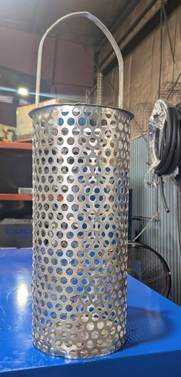
The strainer came out bright, open, and free of the heavy
sludge that had been plugging the perforations. Any remaining light residue
could be knocked off with a quick rinse or touch-up, not 20+ minutes of hand
brushing. These results are exactly what aqueous spray cabinet washers are
designed for: taking parts that would normally require extended manual labor
and cleaning them in just a few minutes of unattended machine time.
|
|
Strainer – Before Cuda | Strainer – After 6 Minutes |
Time, Labor, and Safety Improvements
Based on this single test, the customer could reasonably
move from a 90‑minute manual process to roughly a 6‑minute automated cycle per
strainer — and the machine is doing the work while their technician is free to
handle other tasks. Applied across the customer's actual workload of six
strainers every two to three days, that is a jump from about nine hours of hands-on
scrubbing down to roughly 36 minutes of unattended machine time per rotation.
Key advantages:
- Labor
savings – Technicians now load the basket, start the cycle, and walk
away. That reclaimed time can go back into maintenance, repairs, or
production support instead of scrubbing metal. Automated aqueous washers
routinely cut cleaning labor by 50–80% compared to hand cleaning. - Consistent
results – Every cycle gets the same time, temperature, and spray
pressure, leading to more predictable cleanliness than “whoever has the
brush today.” - Improved
safety and compliance – Cuda systems use water-based detergents rather
than open solvent tanks, reducing employee exposure to VOCs and flammable
liquids and helping facilities align with modern environmental and safety
standards.
For a shop already cleaning six duplex pump strainers every
two to three days, recovering roughly eight hours of technician time per
rotation turns directly into more uptime on production and maintenance work,
plus noticeable reductions in solvent usage, waste handling, and PPE
consumption.
What This Means for Other Facilities
If your operation is still soaking parts in drums, dipping
into open solvent tanks, and brushing by hand, this strainer test is a good
example of what an automatic aqueous parts washer can do.
The pattern is simple:
- Dirty
part in - Short
automatic cycle - Clean
part out
Whether it is duplex pump strainers, pump
housings, filter baskets, or general maintenance parts, a properly sized Cuda
system can turn a messy 90‑minute chore into a short, repeatable, 6–15 minute
automated step while your team focuses on higher-value work.
