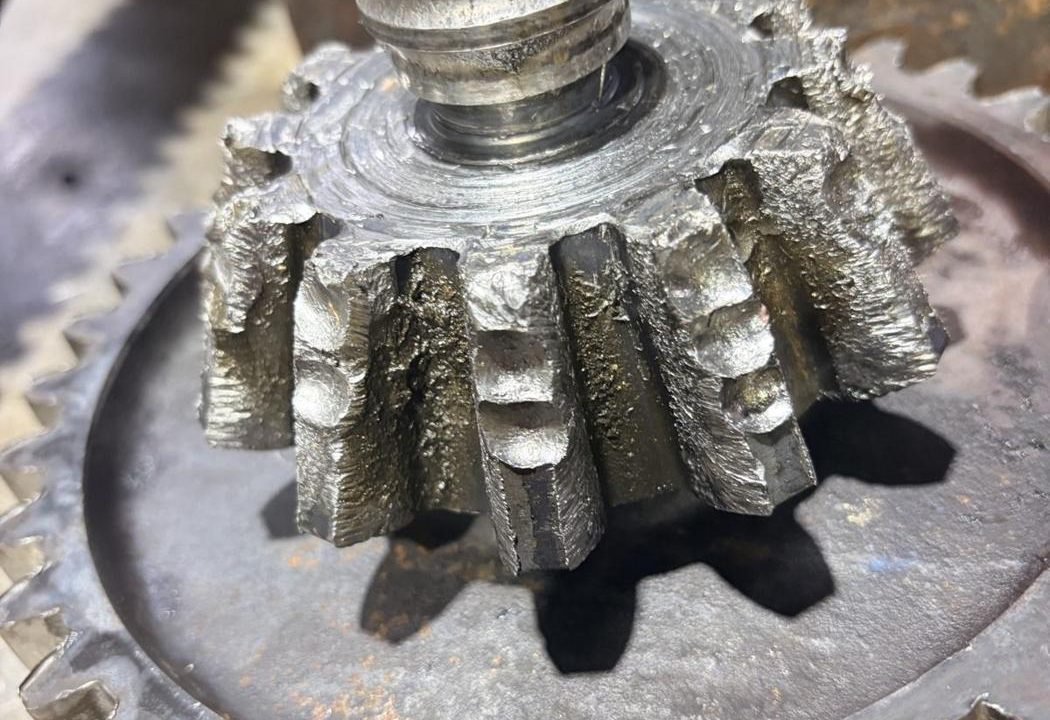
This Duff-Norton 126 100-ton air motor jack came into our shop for repair. When we tore it down, we found three problems: a bearing that had come apart, a bevel gear and bevel pinion damaged beyond reuse, and a torn-up bronze lifting nut in the standard.
We are sharing these photos because most people who run these jacks never see the inside of one. These are the parts that carry the load, and this is what they look like when they are worn out.
The bearing came apart and went through the gears
A bearing in the gear train broke down. Once a bearing comes apart, its loose pieces have nowhere to go except into the gears.
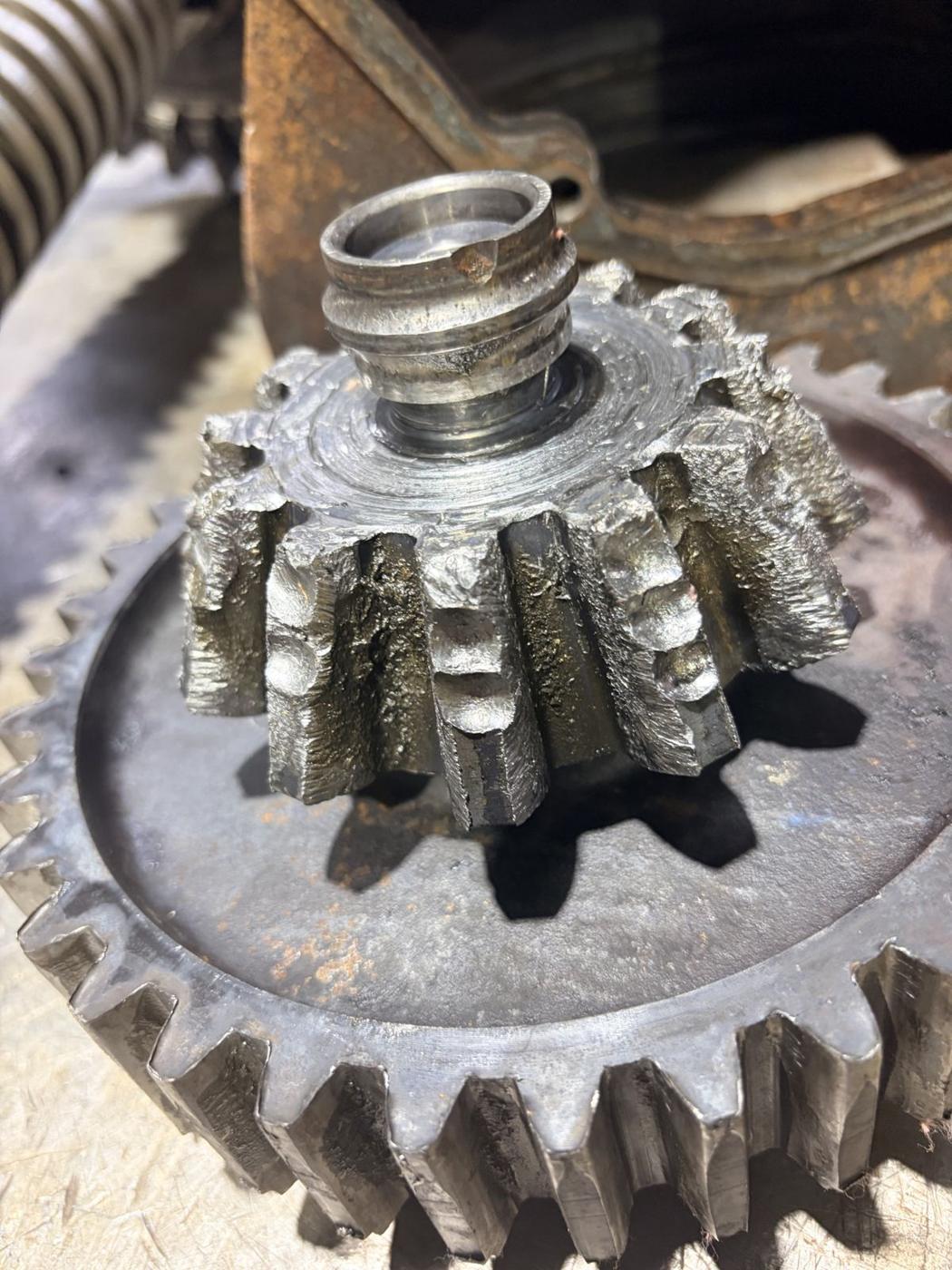
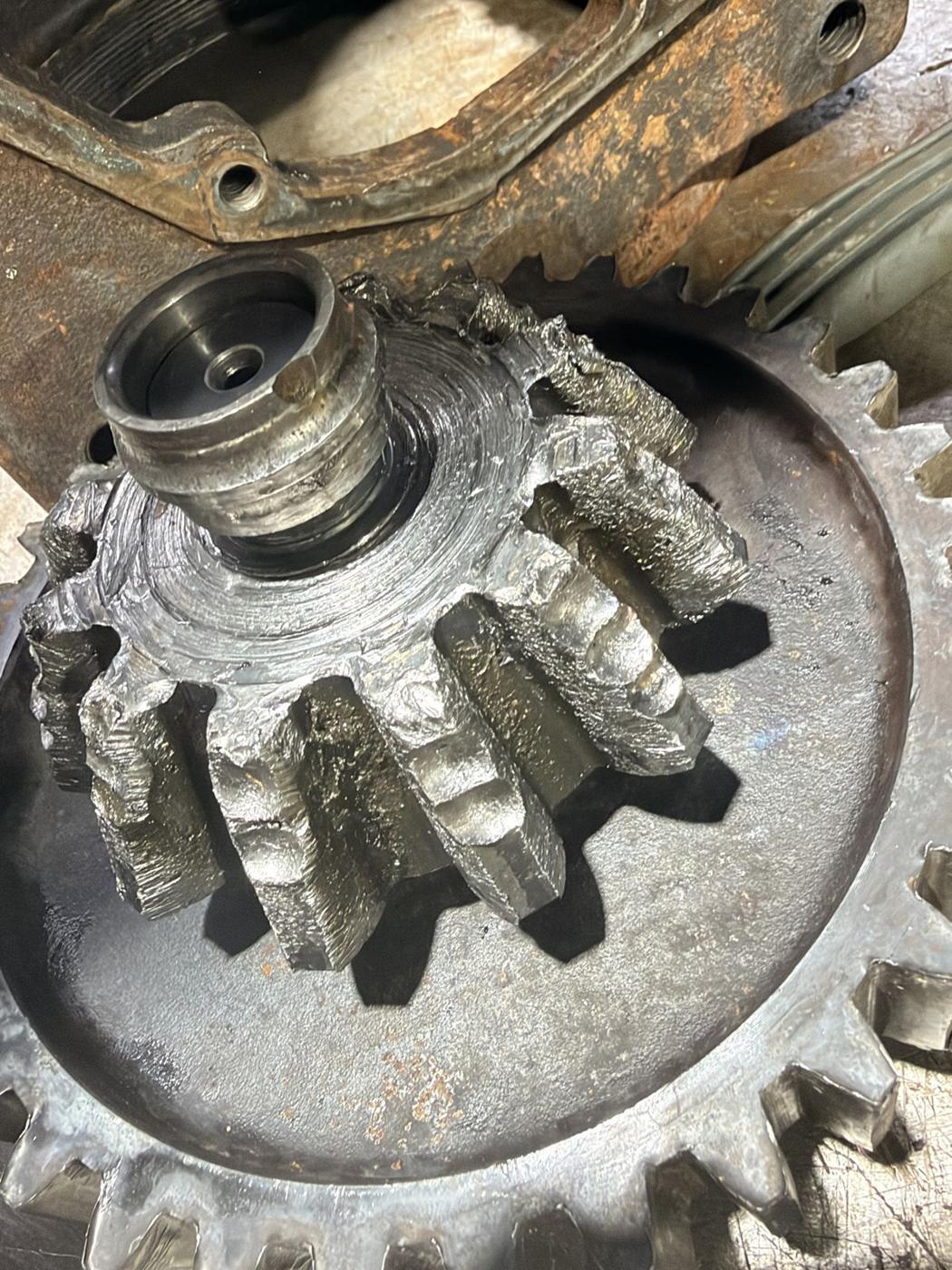
The bevel pinion drives the bevel gear, and the bevel gear turns the lifting screw. On this jack, every pinion tooth is chewed up. The round dents in the teeth match the size and shape of bearing balls passing through the mesh.
The bevel gear took the same damage
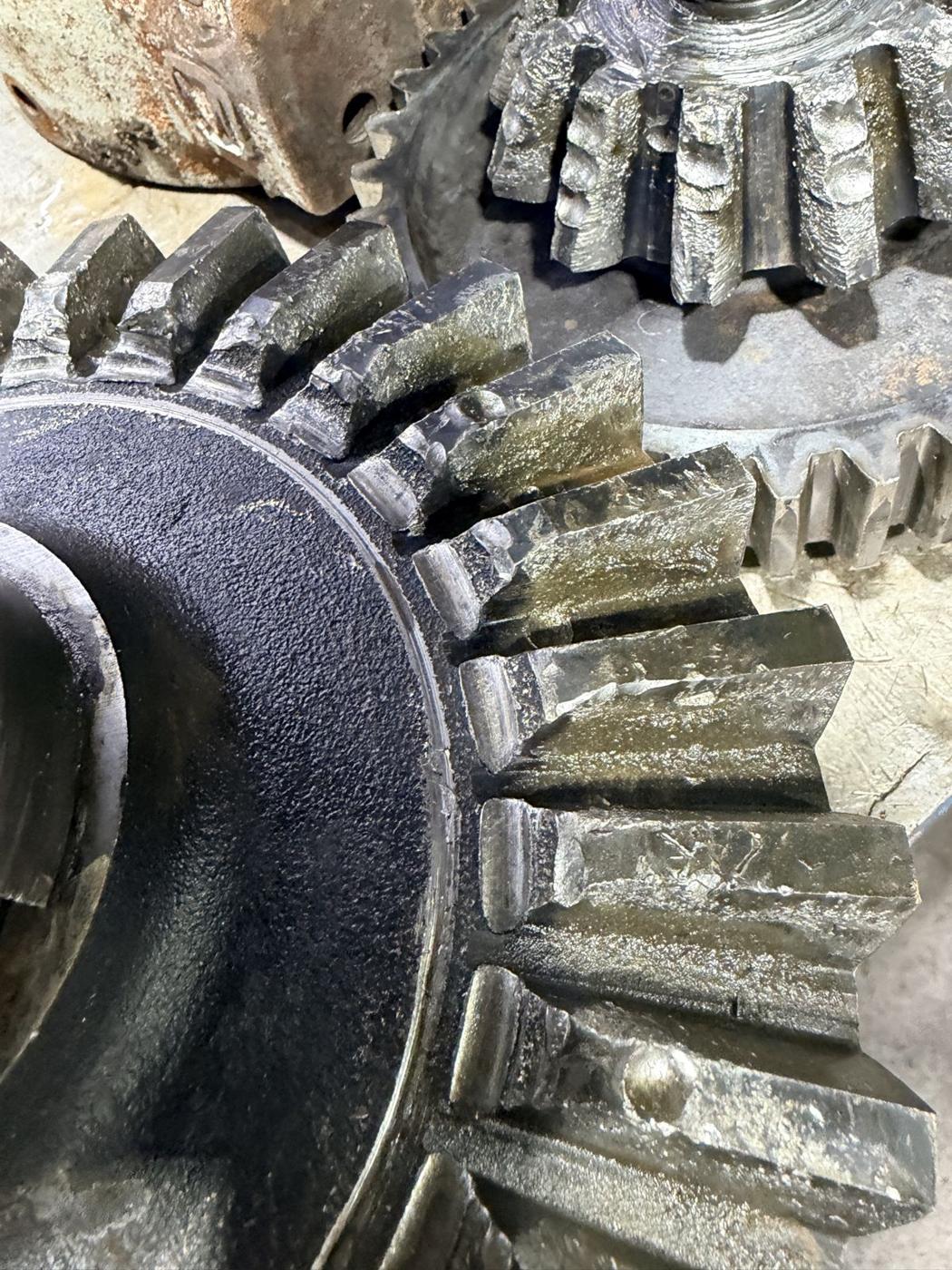
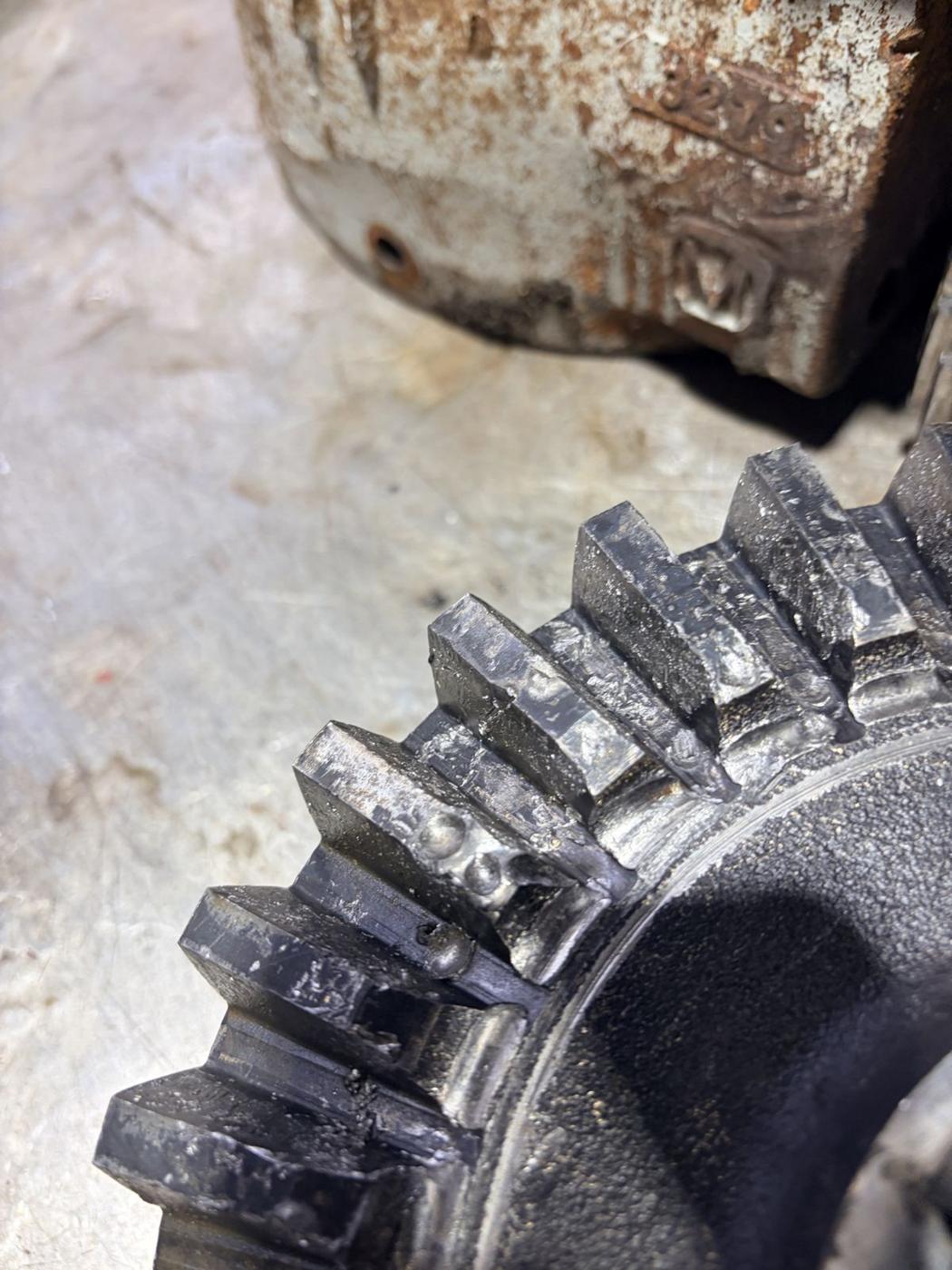
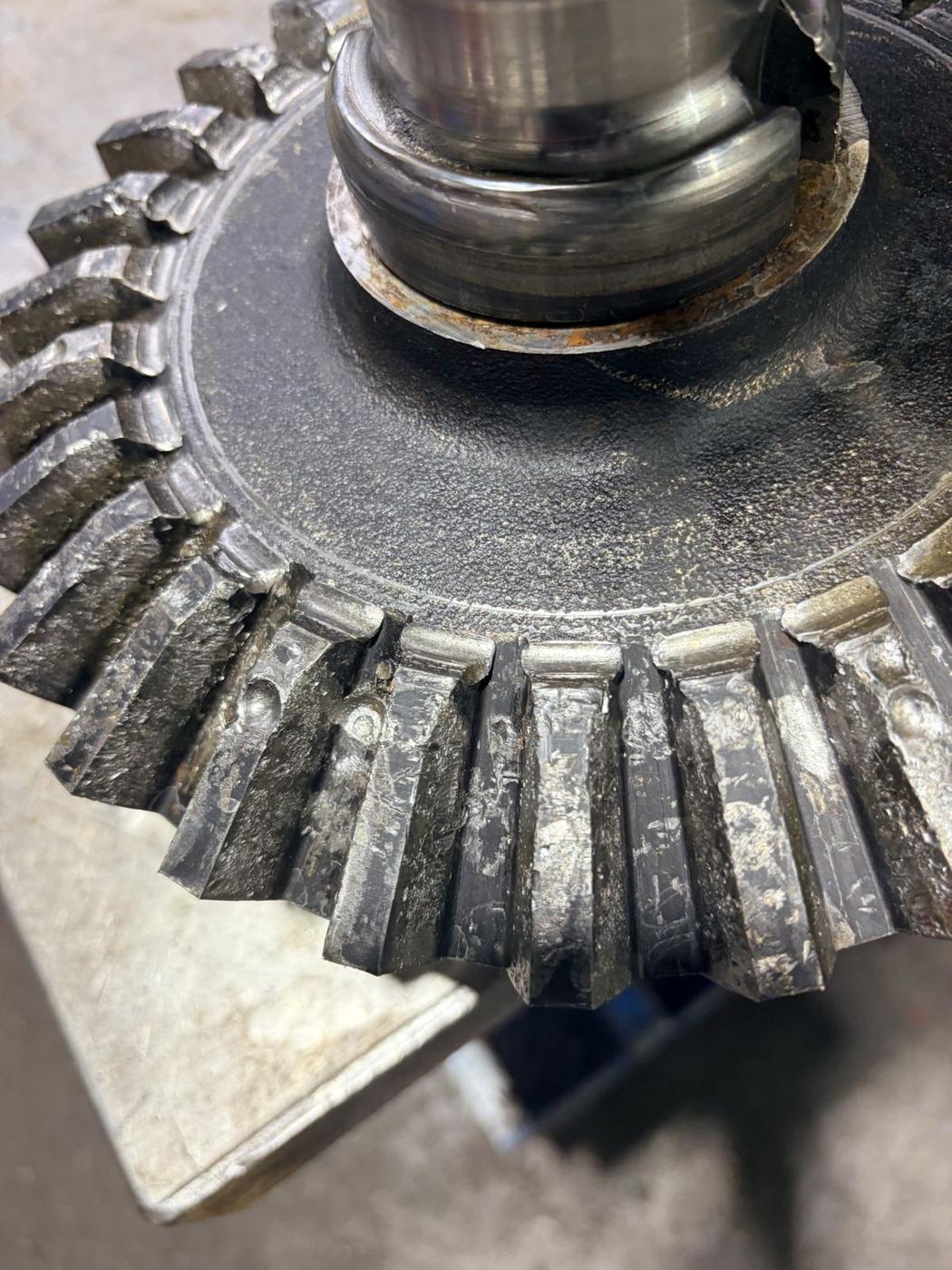
A bad bearing on its own is a fairly small repair. Once it goes through the gears, you are replacing the bevel gear and the pinion as well.
The lifting nut was destroyed too
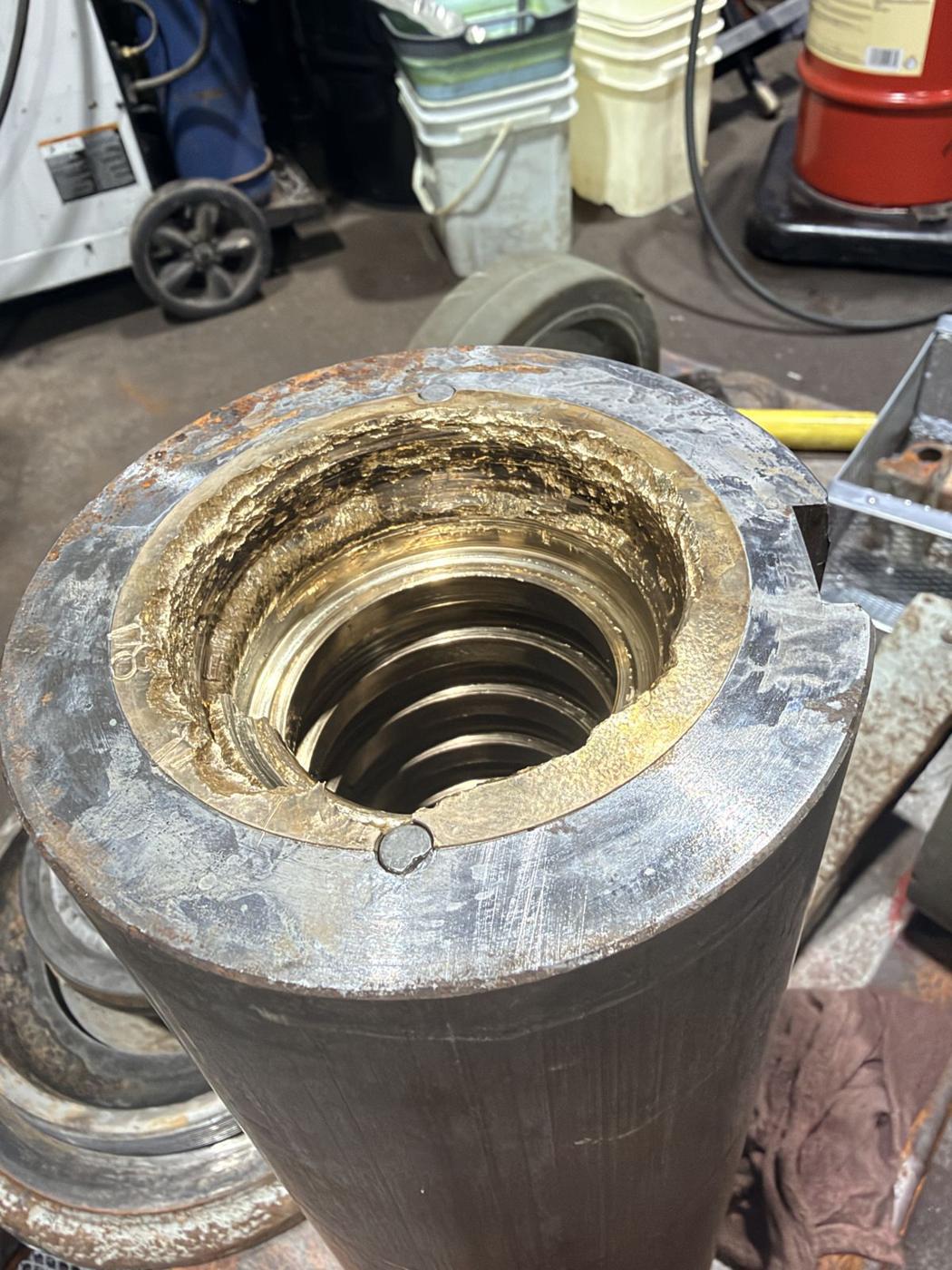
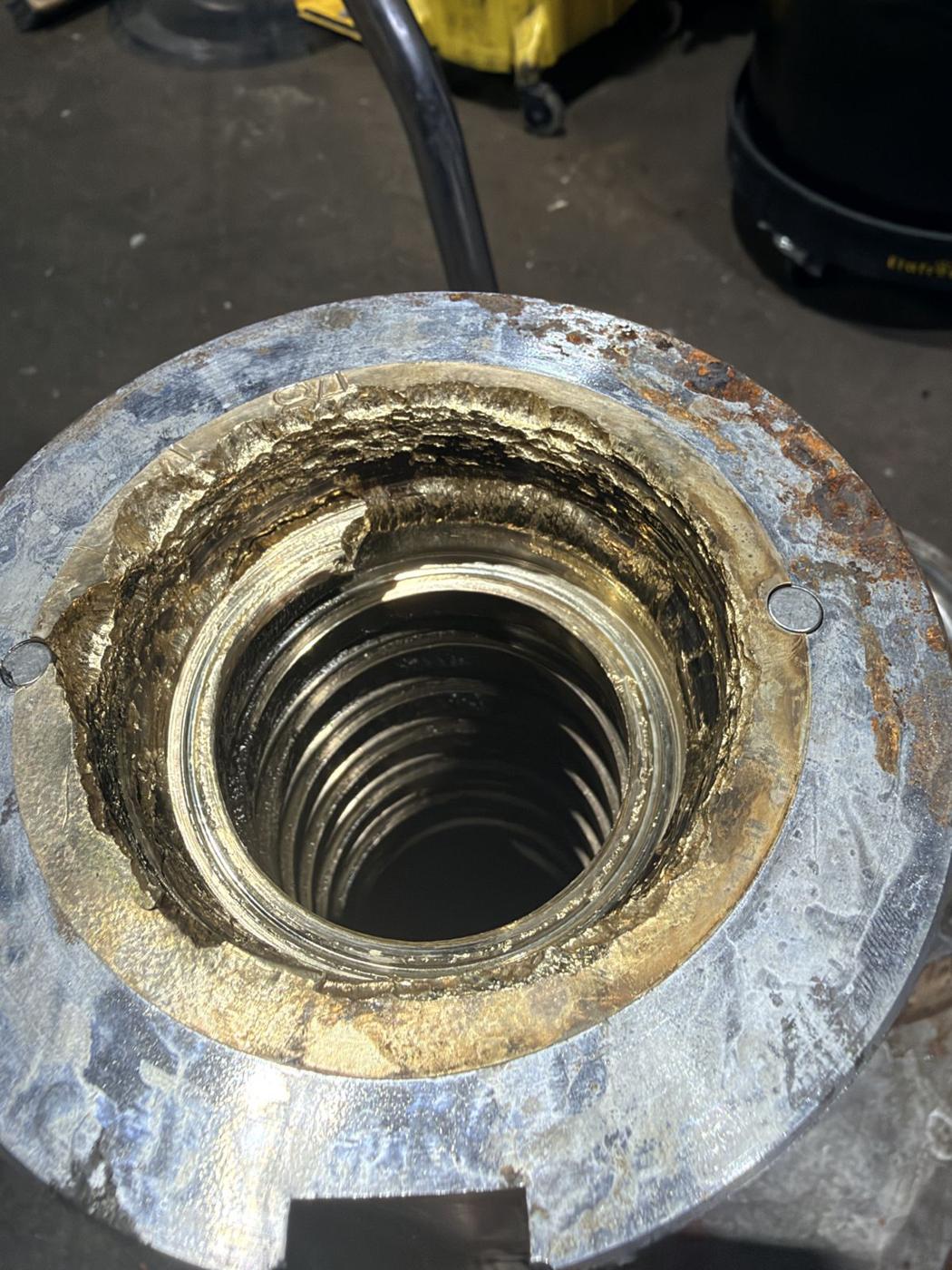
The bronze lifting nut sits in the standard, and the lifting screw threads through it. The nut carries the load every time the jack lifts. This one is torn and galled and can’t go back into service.
Warning signs to watch for
A jack doesn’t usually go straight from working fine to this condition. Stop and have the jack checked if you notice any of these:
- Grinding, clicking or knocking while the jack lifts or lowers
- Lifting that is rough, uneven or slower than normal
- Metal flakes, brass-colored particles or dark, gritty grease
- The jack straining under a load it used to handle easily
- Any change in sound or feel compared with your other jacks
Before using any jack, check it against the inspection steps in the Duff-Norton manual. Always crib or block a raised load.
Repairing early costs less
If this jack had been stopped when the bearing first started to fail, the repair might have been one bearing. Because it kept running, the repair now includes the bearing, the bevel gear, the bevel pinion and the lifting nut, plus the labor to put it all back together.
Regular preventive maintenance and lubrication, as described in the Duff-Norton manual, help catch problems like this early.
Send it to an authorized Duff-Norton service center
Calumet Chicago Company has been an authorized Duff-Norton service center since 1980. We tear down, inspect and repair Duff-Norton air motor jacks in our shop, including the 228R, 326R, 528, 536, 126 and 144 families. We replace worn parts and then test the jack to OEM specifications.
Most of our jack repair work comes to us by shipping, from customers across the country. CCC pays shipping both ways when you send two or more Duff-Norton jacks.